
Decaf Coffee for Acid Reflux — Does It Actually Help?
Coffee and Acid Reflux — A Common

For people who love coffee but struggle with digestive discomfort, bloating, or reflux, switching to decaf often comes up as an option. But is decaf coffee actually better for your gut, or is it more complicated than that? Here’s what we know.
Regular coffee is acidic — with a pH of around 4.5 to 5 — and contains compounds like chlorogenic acids and caffeine that stimulate stomach acid production and increase gut motility. For most people, this is entirely fine. But for those with conditions like GERD (gastro-oesophageal reflux disease), irritable bowel syndrome, or simply a sensitive stomach, these properties can trigger discomfort.
Caffeine plays a role by relaxing the lower oesophageal sphincter — the valve between your oesophagus and stomach — which can allow acid to travel upward. It also speeds up bowel movement, which is why many people feel the urge to visit the bathroom shortly after their morning cup.
Removing caffeine reduces some of the gut-irritating effects, but not all of them. Research suggests that decaffeinated coffee still stimulates gastric acid secretion, though typically to a lesser degree than regular coffee. The chlorogenic acids and other organic acids in coffee remain present after decaffeination.
A study published in the journal Gut found that decaf coffee still triggered significant gastric acid production, which surprised researchers who expected the caffeine-free version to be neutral. So while switching to decaf can reduce symptoms for some people, it doesn’t guarantee a symptom-free experience.
Not all decaf is processed the same way, and the method used can influence how the finished coffee affects your body. The main methods are:
From a gut health perspective, Swiss Water Process decaf is often the preferred choice — not because it fundamentally changes the coffee’s acidity, but because it avoids any potential concerns about chemical residues and tends to use higher-quality green coffee as a starting point.
If gut acidity is your specific concern, the origin and roast profile of the coffee matters as much as whether it’s decaf. Darker roasts are generally lower in chlorogenic acids than lighter roasts, as the roasting process breaks down some of these compounds. Coffees from Brazil and Sumatra tend to have a naturally lower perceived acidity than East African origins.
Cold brew coffee — whether caffeinated or decaf — is also typically lower in acidity than hot-brewed coffee, as the cold extraction process produces fewer acidic compounds.
People who find that their gut discomfort correlates with caffeine intake rather than coffee in general tend to see the most benefit from decaf. If the urge to use the bathroom after coffee is your main issue, removing caffeine often helps significantly. If acid reflux or heartburn is the problem, decaf may reduce but not eliminate symptoms.
Drinking coffee on a full stomach, rather than first thing in the morning, also tends to reduce its impact on gut health for both regular and decaf varieties.
Some emerging research suggests that coffee — including decaf — may actually have a positive effect on gut microbiome diversity, thanks to its polyphenol content. These plant compounds act as prebiotics, feeding beneficial gut bacteria. Whether decaf shares this benefit equally with caffeinated coffee is still being studied, but the early picture is broadly positive.
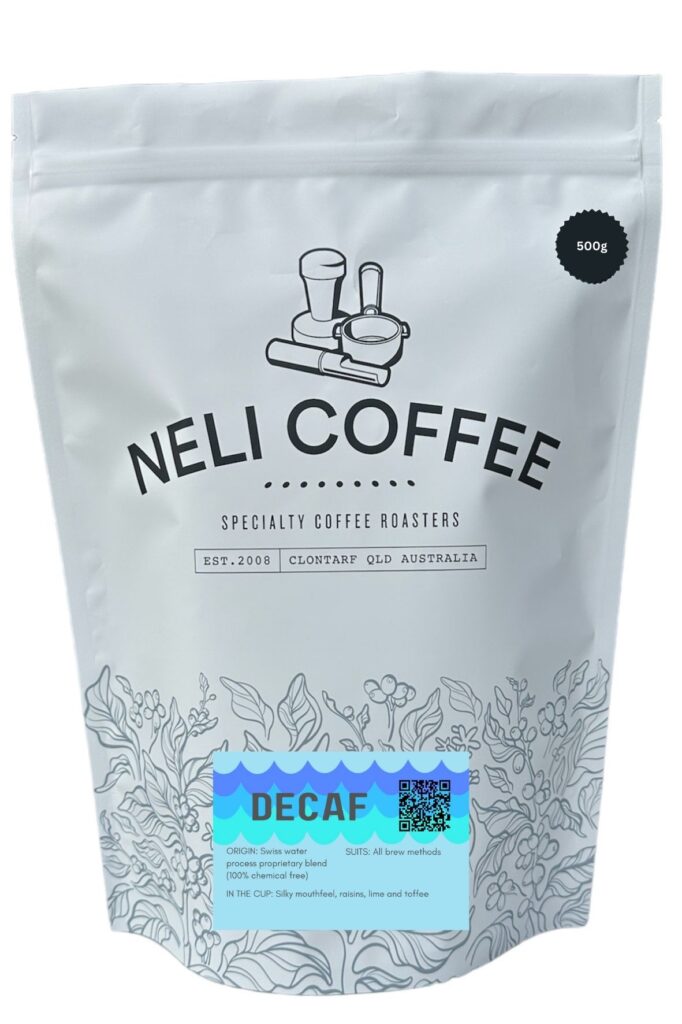
Neli Coffee’s decaf range uses Swiss Water Process beans, so you’re getting a clean, high-quality option if you’re looking to reduce your caffeine intake while keeping the ritual of a well-made cup.
Coffee and Acid Reflux — A Common
Why Green Coffee Storage Matters Green coffee

Two Different Drinks, Often Confused Walk into

Why Cold Brew Coffee? Cold brew coffee