Decaf Coffee for Acid Reflux — Does It Actually Help?

White ceramic teacup with coffee beans illustrating the relationship between coffee and digestion

Coffee and Acid Reflux — A Common Tension

For many coffee drinkers, acid reflux or heartburn is an unwelcome part of the morning routine. The burning sensation, the discomfort after the first cup — it can make something you love feel like something you have to manage. Decaf coffee is often suggested as the obvious fix. But does switching to decaf actually reduce reflux symptoms, or is the caffeine just one piece of a more complicated picture?

What Causes Coffee to Trigger Reflux?

Acid reflux occurs when stomach acid travels back up into the oesophagus, causing irritation. Coffee can contribute to this through several mechanisms — and caffeine is only one of them:

  • Caffeine — relaxes the lower oesophageal sphincter (the valve that keeps stomach acid where it belongs), making reflux more likely
  • Acidity — coffee is naturally acidic, with a pH typically between 4.5 and 6.0 depending on origin, roast level, and brewing method; this acidity can irritate an already sensitive oesophagus
  • Chlorogenic acids — these compounds, present in all coffee, stimulate gastric acid production in the stomach, increasing the volume of acid available to reflux
  • Gastric motility — coffee stimulates the digestive system, which can contribute to reflux in some people regardless of caffeine or acid level
Clear glass of coffee on a white table representing a gentle low-acid coffee option

Does Decaf Actually Help?

The short answer is: sometimes. Removing caffeine addresses one of the triggers — sphincter relaxation — but leaves the others largely intact. Decaf coffee still contains chlorogenic acids, still stimulates gastric acid production to a degree, and still has the same natural acidity as its caffeinated equivalent (the decaffeination process does not meaningfully alter pH).

Research on this topic is mixed. Some studies find that switching to decaf reduces symptoms for people whose reflux is primarily caffeine-driven. Others find little difference, suggesting that the other compounds in coffee play a larger role than caffeine alone for many individuals.

If your reflux is severe or you are managing a diagnosed condition such as GERD, the best approach is to work with your doctor rather than self-experimenting with coffee choices.

White ceramic mug filled with black coffee representing a morning coffee ritual

What Makes a Coffee Lower in Acid?

Beyond the caffeine question, there are several factors that influence how acidic a coffee actually is in the cup:

  • Roast level — darker roasts have lower concentrations of chlorogenic acids, as these break down during extended roasting. A dark roast can be gentler on the stomach than a light roast, though other acids develop at higher temperatures, so the relationship is not perfectly linear.
  • Origin — coffees from lower altitudes and from regions like Brazil or Sumatra tend to have naturally lower acidity than high-altitude East African coffees.
  • Processing method — wet-processed (washed) coffees tend to be brighter and more acidic in the cup; natural-processed coffees often present as softer and heavier-bodied.
  • Brewing method — cold brew is significantly lower in acidity than hot-brewed coffee of any kind, because the cold-water extraction draws out fewer acid compounds. It may be the most stomach-friendly way to brew coffee for acid-sensitive drinkers.
  • Concentration — a longer, more diluted brew will be less acidic than a concentrated espresso.
Artisan coffee cup in a warm cafe setting representing specialty coffee experience

Practical Tips for Coffee Drinkers with Reflux

If you experience reflux but do not want to give up coffee entirely, here are some adjustments worth trying:

  • Try cold brew instead of hot-brewed coffee — the lower acidity is the most significant practical change you can make
  • Choose a darker roast from a naturally lower-acid origin such as Brazil or Sumatra
  • Avoid drinking coffee on an empty stomach, which increases the concentration of acid in the stomach relative to its contents
  • Try smaller volumes more slowly rather than a large cup quickly
  • If switching to decaf, give it several weeks before drawing conclusions — individual responses vary
  • Add a small amount of milk if you take your coffee black; milk can buffer some of the acidity

Finding a Coffee That Works for You

Acid reflux and coffee do not have to be mutually exclusive. The relationship between coffee and digestive comfort is highly individual — what triggers one person does not necessarily affect another in the same way. Experimenting with decaf, roast level, brewing method, and timing can help you find a version of the coffee habit you love that your body tolerates better.

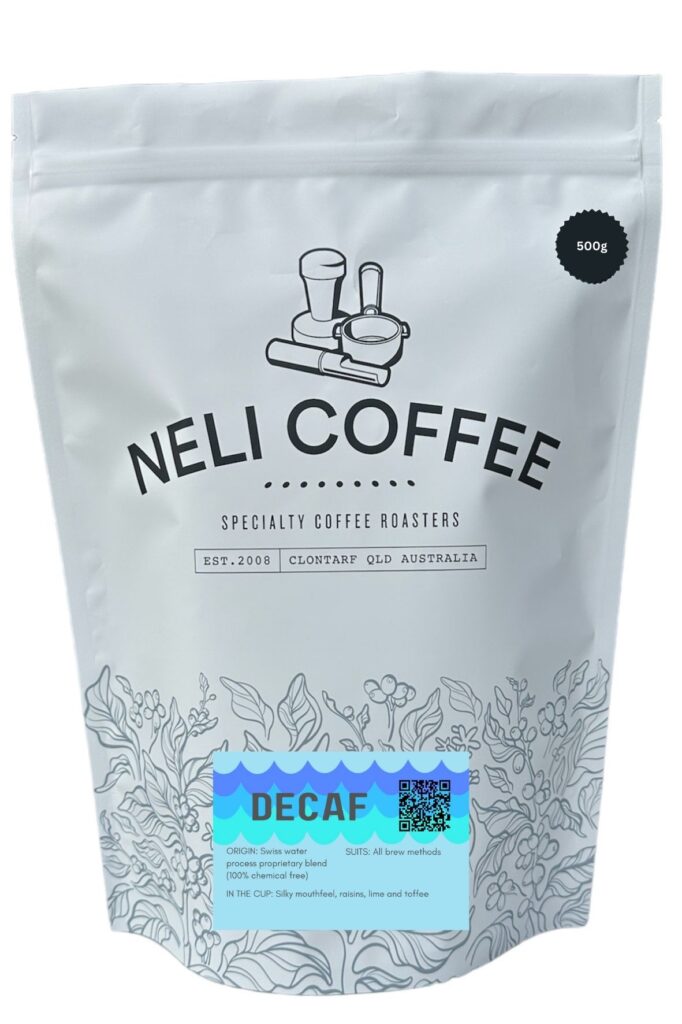
Explore the range of single-origin and specialty coffees at Neli Coffee, including darker roasts and naturally lower-acid options, to find a coffee that suits both your palate and your digestive comfort.
Recommended products

You have already read:

Recent Posts